
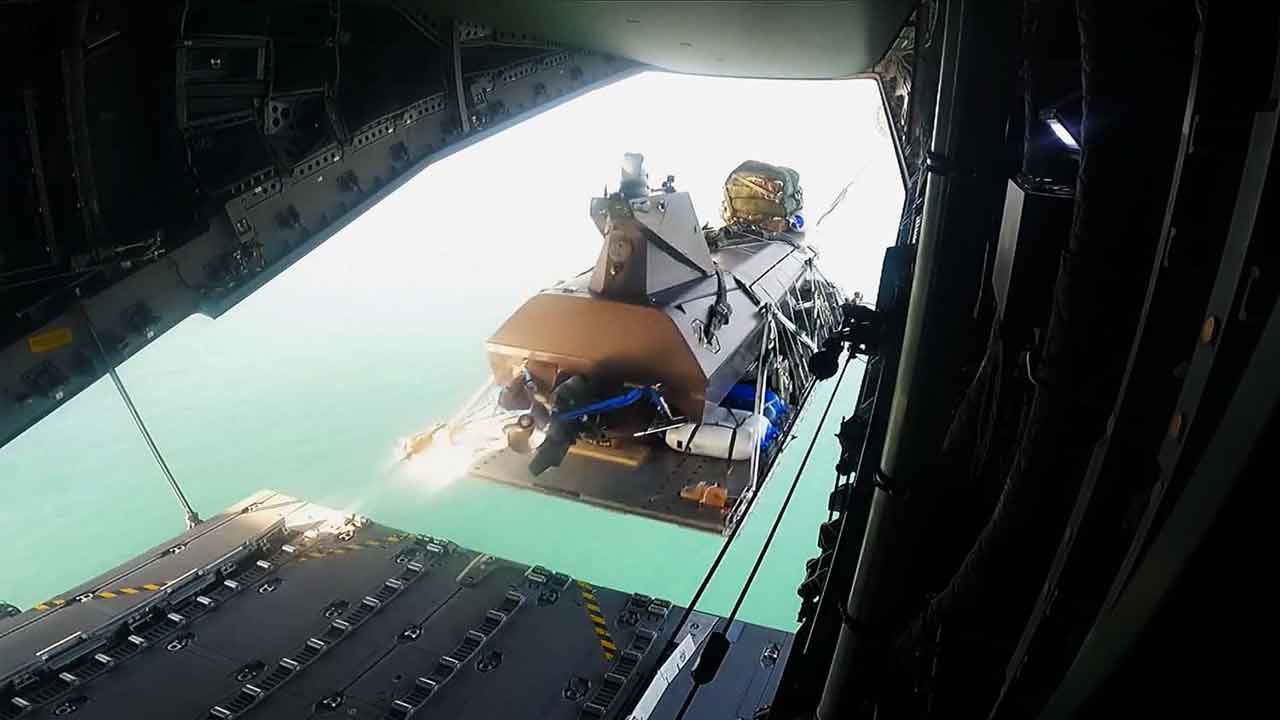
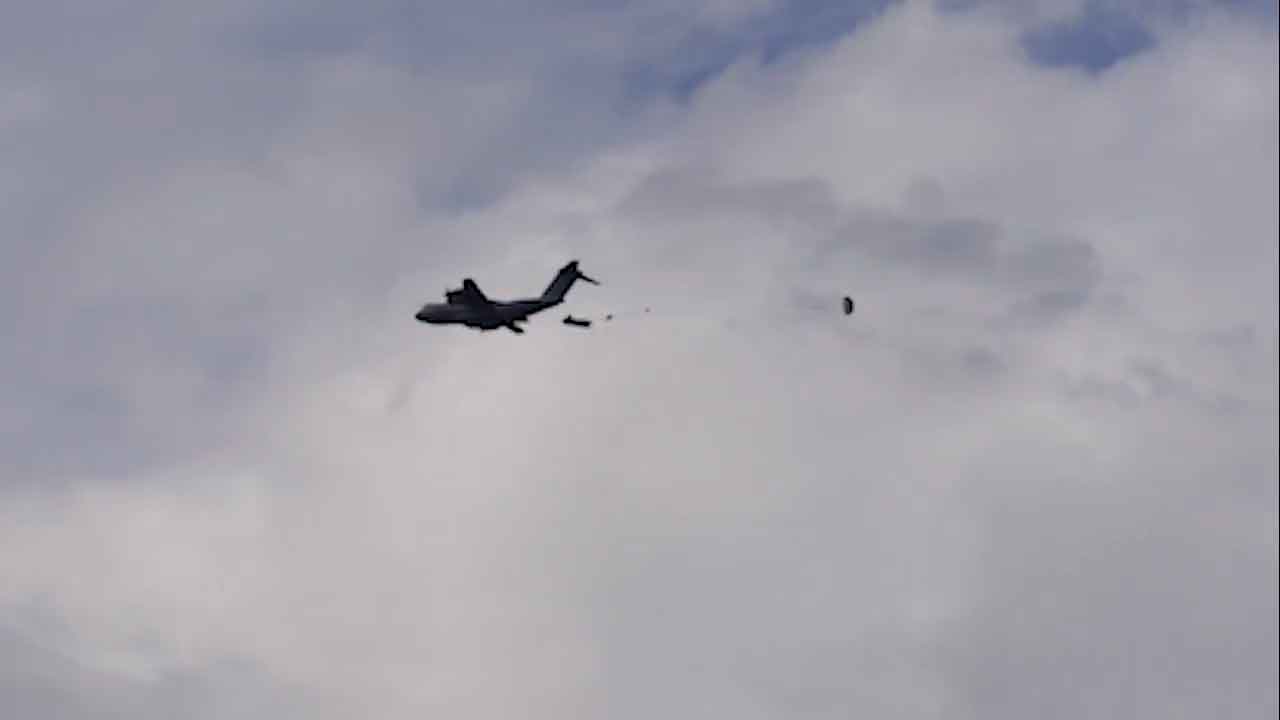
The United Kingdom’s Royal Navy has taken an important step in the use of uncrewed vessels by supporting a pioneering aerial launch test carried out over the North Sea. The demonstration involved the parachute launch of an uncrewed surface vessel from an A400M military transport aircraft.
The test was conducted by Kraken Technology Group and Capewell, with support from the Royal Navy under Project Beehive, an initiative focused on the rapid adoption of new technologies and the development of a future hybrid fleet combining crewed and uncrewed assets.
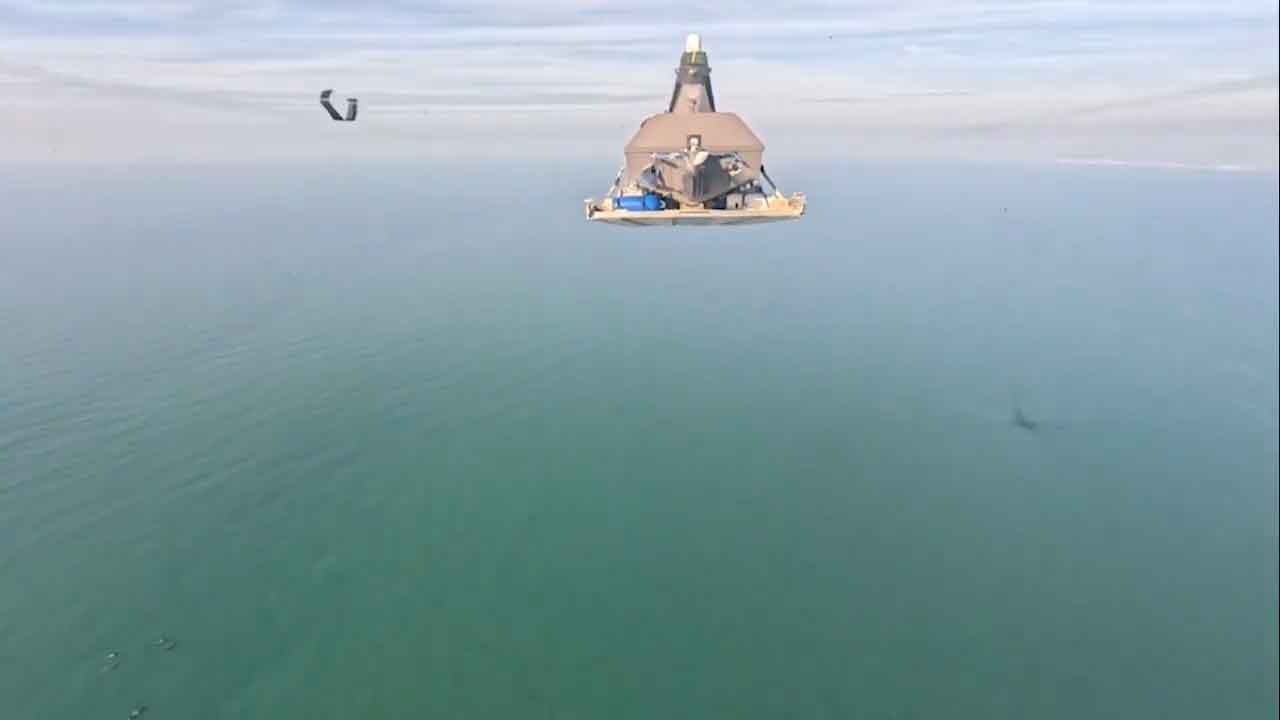
During the campaign, carried out over six days, a Kraken K3 Scout vessel was launched four times from an altitude of approximately 1,300 feet, equivalent to about 396 meters. According to the Royal Navy, it was the first demonstration of its kind involving this cargo extraction format from a military transport aircraft.
The main objective was to prove that an uncrewed vessel can withstand an aerial launch and then operate at sea without immediately depending on a support ship or a nearby port facility. The capability significantly expands the operational flexibility of this type of platform, especially in hard-to-reach areas or in situations requiring a rapid maritime presence.
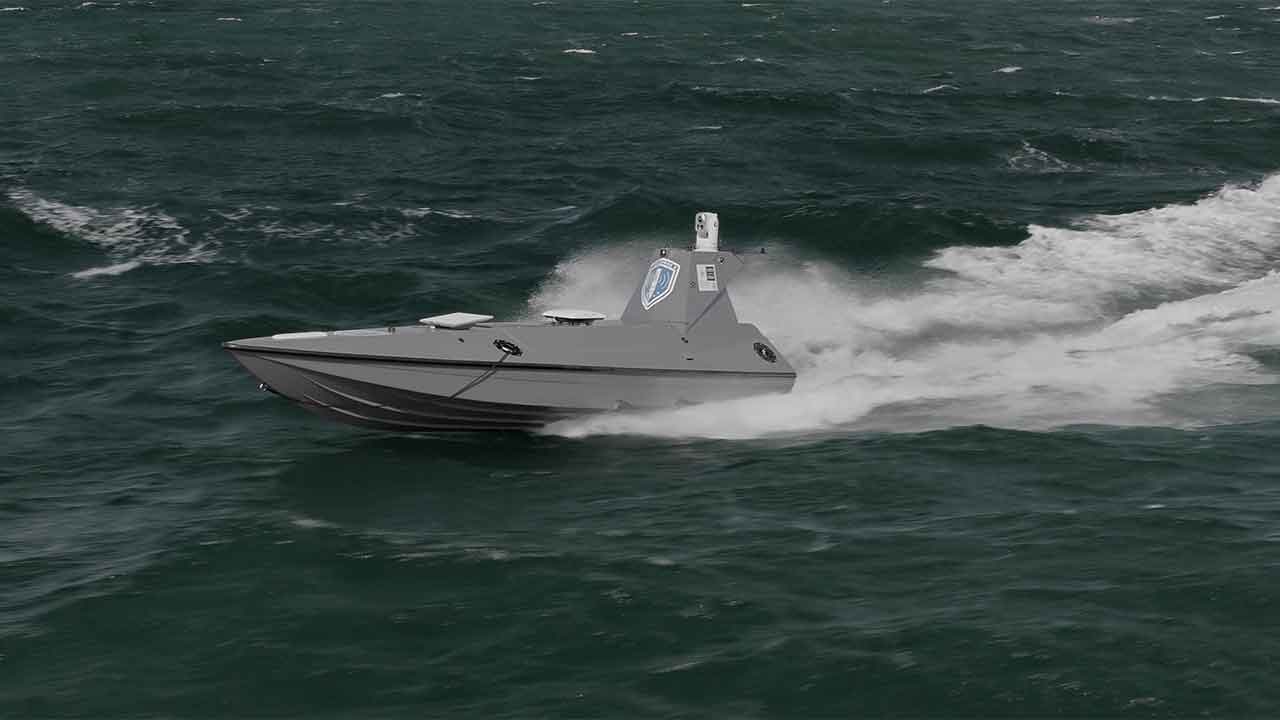
The vessel used in the test was a Kraken K3 Scout configured according to the requirements of Project Beehive. The model can be employed in missions such as surveillance, force protection, reconnaissance, and support for specialized maritime operations. For the launch, the vessel was attached to Capewell’s Universal Maritime Craft Aerial Delivery System, a sled-like structure designed to transport and release maritime payloads from aircraft.
The operation was carried out in challenging conditions, with the sea reaching state 4 on the sea state scale, which can include waves of up to around 2.4 meters. Even so, the same vessel and the same launch platform were used in all four drops carried out during the campaign.
+ Click here to watch the video of the launch operation
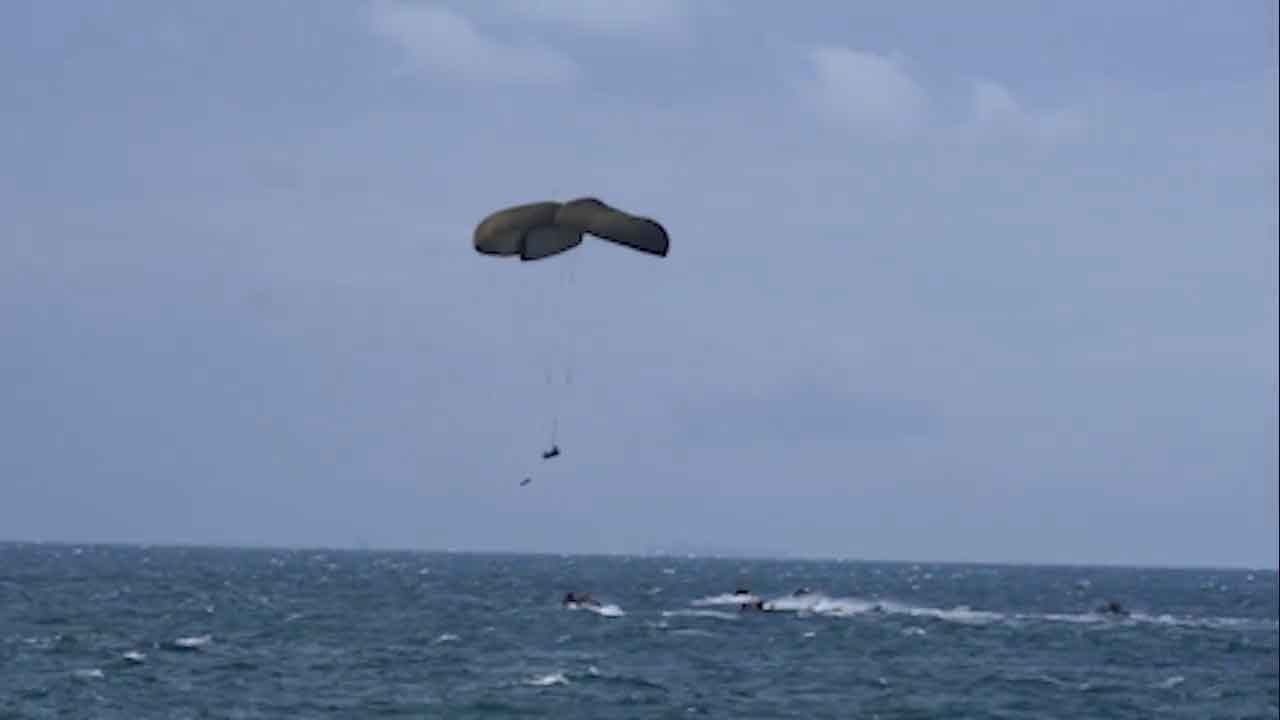
For the Royal Navy, the test represents an important advance in the search for new ways to rapidly position autonomous or remotely operated naval assets. One of the limitations of small uncrewed surface vessels is precisely their ability to travel long distances to the area of operation. Launching from an aircraft expands this possibility, allowing these systems to be deployed with greater speed and range.
Captain Adam Ballard, involved in Project Beehive, said the initiative was created to allow the Royal Navy to quickly learn how to operate uncrewed surface vessels effectively. According to him, the force is evaluating deployment concepts from “motherships” or even “mother aircraft.”
Ballard also highlighted that the demonstration points to a significant change in operational logic. Historically, air power came to be projected from naval power, as happened with aircraft carriers and seaplane support ships. Now, according to him, the sector is moving toward a scenario in which maritime capabilities may also be projected from the air.
Mal Crease, founder and CEO of Kraken Technology Group, said the partnership with Capewell and the Royal Navy demonstrated that the K3 Scout can be rapidly positioned directly from a military aircraft into contested or hard-to-reach waters, already ready to operate.
Mark Lavender, director of business development and training at Capewell, said the tests validated the integration of a complex payload with the UMCADS platform, while also demonstrating how easily the system can be reconfigured for different types of essential equipment, in both maritime and land applications.
The advance reinforces the modernization trend among naval forces, which seek to combine traditional ships, aircraft, advanced sensors, and uncrewed systems to expand presence, reduce risks to crews, and respond more quickly to different operational scenarios.
+ Ukraine wants to replace Soviet helicopters with Black Hawks
Source and images: Royal Navy. This content was created with the help of AI and reviewed by the editorial team.
